Student Driving License Reform 2026: New Rules for 16-18 Year Old Students in India – Complete Guide via Sarathi Parivahan
Getting your first driving license is an exciting milestone that brings independence and responsibility. If you’re a student planning to get your license in 2026, there are important new rules you need to know. The Ministry of Road Transport and Highways has introduced major reforms specifically targeting young drivers aged 16 to 18 years.
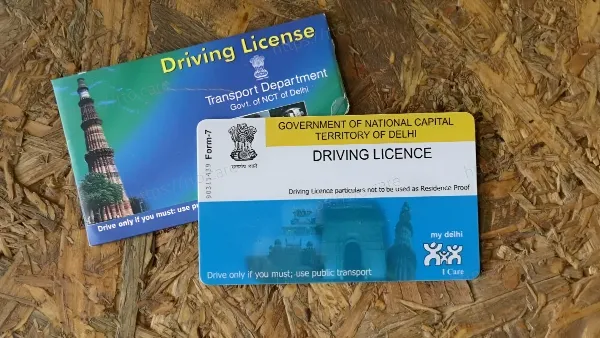
These changes aren’t just minor adjustments. They completely reshape how students obtain their driving licenses in India. The goal is simple: create safer roads by ensuring teenage drivers receive proper training before getting behind the wheel independently.
What’s Changed in 2026?
The biggest change is the mandatory 25-hour supervised training requirement. Unlike before, when you could get a learner’s license and practice casually, the new system demands structured training with proper documentation.
Parents now play a bigger role too. The reforms treat license acquisition as a family responsibility rather than just an individual achievement. Your supervisor needs to actively participate in your learning journey and sign off on your progress through a digital logbook.
Age-specific restrictions have become stricter. If you’re 16, you can only apply for gearless two-wheelers up to 50cc. Once you turn 18, you become eligible for geared vehicles and cars, but you’ll still need to complete additional training modules.
The graduated licensing system is another major addition. You don’t get full driving privileges immediately. Instead, you progress through stages, each with specific restrictions designed to build your experience safely.
Who Can Apply Under the New Rules?
For 16-Year-Old Students:
You can apply for a learner’s license for gearless scooters and motorcycles once you turn 16. However, you must be enrolled in a recognized school or college. Your application needs notarized parental consent from both parents, along with identity proof for everyone involved.
Before applying, you must complete a road safety awareness course. This course covers traffic rules, road signs, and emergency procedures. It takes about 4 to 6 hours and gives you a certificate valid for six months.
For 18-Year-Old Students:
At 18, your options expand significantly. You can apply for licenses covering geared motorcycles, cars, and light commercial vehicles. Even if you’ve been driving informally, you still need to complete the full supervised training requirement. The system doesn’t recognize casual practice as a substitute for structured learning.
Required Documents Checklist
| Document Type | What You Need | Important Notes |
|---|---|---|
| Age Proof | Birth certificate, school certificate, or Aadhaar card | Must clearly show your date of birth |
| Address Proof | Utility bill, Aadhaar card, or passport | Must be less than 6 months old |
| Identity Proof | Aadhaar card, school ID, or passport | Government-issued ID works best |
| Parental Consent (16 years) | Notarized consent form with both parents’ signatures | Mandatory for minors only |
| Educational Proof | School enrollment certificate or student ID | Must be from current academic year |
| Road Safety Certificate | Course completion certificate | Valid for 6 months from issue |
| Medical Certificate | Vision test and health certificate | From registered medical practitioner |
Step-by-Step Guide to Apply on Sarathi Parivahan
The entire process happens online through Sarathi Parivahan. This government portal has been updated to handle all the new student license requirements smoothly.
Creating Your Account
Start by registering on the portal. You’ll need your email address and mobile number. The system sends OTPs to both for verification. Choose these carefully because all official communications come through these channels.
Your account becomes your personal dashboard where you track application status, book test appointments, and upload documents. Take a moment to explore the interface after registration.
Filling Your Application
Log in and select “Apply for Learner’s License” from the menu. For 16-year-olds, choose “MCWOG” (Motorcycle Without Gear). At 18, you get additional options like “MCWG” (Motorcycle With Gear) and “LMV” (Light Motor Vehicle).
Fill every field accurately. The system validates information like Aadhaar numbers and birth dates against government databases. Any mismatch causes immediate rejection.
Uploading Documents
This step trips up many applicants. Your scans or photos must be clear and legible. Use PDF format for certificates and JPEG for photographs. Each document type has specific size limits.
Pay special attention to your photograph. It needs a white or light background with a clear frontal view. Professional passport photos work best. Selfies get rejected.
If you’re 16, make sure your parental consent form shows both parents’ signatures clearly along with the notary’s seal.
Payment and Test Booking
Application fees range from 150 to 400 rupees depending on your state. You can pay through debit card, credit card, net banking, or UPI. Save your payment receipt because the transaction reference number is crucial if issues arise.
Once approved, book your test slot through the portal. Popular locations often have 1 to 2 week waiting periods, so book early. The test includes written questions about traffic rules and a practical sign recognition component.
Understanding the 25-Hour Training Requirement
This is the most significant change in the new system. You must complete 25 hours of supervised driving before taking your permanent license test.
Who Can Supervise You?
Your supervisor needs a valid driving license for at least five years in the same vehicle category you’re learning. If you’re practicing car driving, they must have held a car license for five years.
Parents commonly serve as supervisors, but older siblings, relatives, or professional driving instructors work too. The supervisor must sit in the vehicle during all practice sessions and be ready to take control if needed.
Professional driving schools with certified instructors are another option. Their training hours count equally in the digital logbook system.
The Digital Logbook System
Every training session gets recorded in your digital logbook on parivahan gov.in. This isn’t just a formality. The logbook tracks the date, time, duration, skills practiced, and your supervisor’s assessment for each session.
Your supervisor logs in with their credentials and rates your performance across different parameters like vehicle control, traffic awareness, and lane discipline. You cannot backdate entries. The system uses GPS verification and timestamps to ensure authenticity.
Skills You Must Cover
Your 25 hours must cover diverse driving scenarios. Simply driving around your neighborhood doesn’t count. The system mandates specific skill areas:
- Smooth starting, acceleration, and braking
- Proper mirror usage and blind spot checking
- Lane changing and merging with traffic
- Navigating intersections and roundabouts
- Understanding road signs and markings
- Parking techniques including parallel and reverse parking
- Driving in rain or wet conditions
- Basic night driving with proper light usage
- Emergency braking and hazard responses
- Sharing roads with pedestrians and cyclists
Each skill needs at least one dedicated session. Your logbook won’t show complete until you’ve logged practice across all mandatory categories.
Training Hours Breakdown
| Skill Category | Minimum Hours | What to Practice | Key Focus |
|---|---|---|---|
| Basic Control | 5 hours | Empty lots, quiet streets | Smooth acceleration, proper braking |
| Traffic Navigation | 6 hours | Moderate traffic, signals | Following rules, safe distance |
| Highway Driving | 4 hours | Major roads, higher speeds | Lane discipline, speed control |
| Parking Skills | 3 hours | Crowded areas, tight spaces | Mirror usage, spatial awareness |
| Adverse Conditions | 2 hours | Rain, evening hours | Adapting to conditions, caution |
| Urban Challenges | 3 hours | Markets, school zones | Pedestrian awareness, slow maneuvering |
| Emergency Response | 2 hours | Various locations | Quick decisions, hazard identification |
Taking Your Permanent License Test
After completing supervised training and holding your learner’s license for the minimum period, you’re ready for the permanent license test.
What Happens During the Test
The test starts with a vehicle safety check. You’ll identify basic components like the brake fluid reservoir, coolant tank, and tire pressure gauges. This shows you understand vehicle maintenance basics.
The practical driving portion happens on actual public roads near the testing center. You’ll encounter real traffic while being evaluated. The examiner assesses your technical skills and road awareness.
Common test challenges include busy intersections, lane changes in traffic, responding to pedestrians, handling obstacles, and parallel parking within time limits. The test typically lasts 25 to 30 minutes covering 3 to 4 kilometers.
Passing the Test
You start with 100 points and lose points for mistakes. You need at least 70 points to pass. Minor errors like late turn signals cause small deductions. Moderate mistakes like improper lane positioning cost more points. Major violations like running red lights mean instant failure.
If you fail, you must wait 15 days before retesting. Use this time for extra practice focused on your weak areas. Update your digital logbook with these additional training sessions.
Cost Breakdown for Your License
Understanding the complete costs helps you budget properly.
What You’ll Spend
Learner’s license applications cost 150 to 400 rupees. Permanent licenses run 200 to 600 rupees. These fees vary by state but are uniform within each state.
The supervised training creates the biggest cost variation. If parents or relatives supervise you, expect 2,000 to 5,000 rupees for fuel and vehicle use over 25 hours. Professional driving schools charge 300 to 800 rupees per hour, making complete packages cost 7,500 to 15,000 rupees.
Road safety courses add 200 to 1,500 rupees depending on whether you choose government or private providers. Medical certificates cost 300 to 800 rupees. Budget another 500 to 1,000 rupees for photos, document preparation, and notarization.
Complete Cost Estimate
| Expense | Budget Range | Average Cost |
|---|---|---|
| Learner’s License Fee | ₹150 – ₹400 | ₹250 |
| Road Safety Course | ₹200 – ₹1,500 | ₹600 |
| Medical Certificate | ₹300 – ₹800 | ₹500 |
| Document Prep | ₹100 – ₹300 | ₹200 |
| Training (Family) | ₹2,000 – ₹5,000 | ₹3,000 |
| Training (Professional) | ₹7,500 – ₹15,000 | ₹10,000 |
| Permanent License Fee | ₹200 – ₹600 | ₹400 |
| Miscellaneous | ₹300 – ₹1,000 | ₹500 |
| Total (Family Supervision) | ₹3,250 – ₹8,600 | ₹5,450 |
| Total (Professional Training) | ₹8,750 – ₹18,600 | ₹12,000 |
Common Mistakes to Avoid
Learning from others’ errors speeds up your process significantly.
Document Problems
Blurry scans are the top rejection cause. Always photograph or scan documents in good lighting with everything lying flat. Make sure information matches across all documents. If your school certificate says “Rahul Kumar Singh” but your Aadhaar reads “Rahul K Singh,” fix this before applying.
Check document dates too. Address proof must be within six months of application. An eight-month-old electricity bill won’t work even if your address hasn’t changed.
Application Errors
Don’t rush through the online form. The system lets you save drafts and return later. Verify every entry before final submission. Typos cause unnecessary rejections.
Many students try booking their permanent test too early, before completing training hours or the minimum learner period. This creates frustration when the system blocks booking.
Check your email and phone regularly for notifications about verification status or test appointments. Missed communications often result in cancelled applications requiring complete restart.
Training Log Issues
Completing all 25 hours in just a few days looks suspicious. The system flags unrealistic patterns. Space your sessions over several weeks for better learning and smoother verification.
Be specific in your log entries. Instead of “practiced driving,” write “practiced parallel parking for 90 minutes focusing on mirror usage.” This demonstrates genuine training.
Don’t log impossible sessions like night driving at 2 PM or six consecutive hours without breaks. Keep your logs realistic and honest.
After Getting Your License
Your license marks the beginning of responsible driving, not the end of learning.
New Driver Restrictions
Even with a permanent license, drivers under 21 face certain restrictions. Many states limit passenger numbers during your first six months, especially teenage passengers who create distractions.
Some areas restrict nighttime driving between 11 PM and 5 AM for new teen drivers. These high-risk hours see reduced visibility and increased fatigue.
Keep Learning
Smart drivers continue education after getting licensed. Consider taking an advanced driving course within your first year. These cover scenarios like hydroplaning recovery, emergency lane changes at highway speeds, and dealing with aggressive drivers.
Join safe driving communities online where you can discuss experiences and learn from others without making the same mistakes yourself.
Personalizing Your Vehicle
After getting your license, you might want a special registration number for your vehicle. The fancy parivahan system lets you bid on premium numbers with special patterns or lucky digits. While completely optional, many new drivers enjoy this customization option available through the same Sarathi Parivahan portal.
Final Thoughts
The 2026 student driving license reforms demand more time and effort than before, but they create better-prepared drivers. Every requirement serves a clear purpose. The supervised training builds real skills. The digital logbook ensures accountability. The enhanced testing verifies actual capability.
Success requires patience and genuine commitment to learning, not just completing formalities. Students who approach the process seriously find that the experience itself becomes valuable preparation for driving responsibilities.
The Sarathi Parivahan platform makes everything transparent and accessible. Understanding how to use it effectively streamlines your journey and keeps you informed at every stage.
Remember your goal isn’t just getting a license. It’s becoming a safe, skilled driver who makes Indian roads safer for everyone. The license simply recognizes that you’ve achieved the foundational level of this ongoing journey.